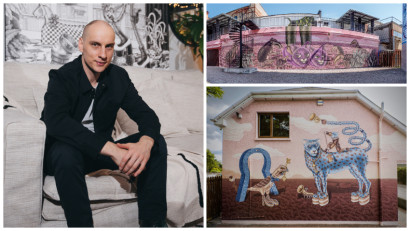
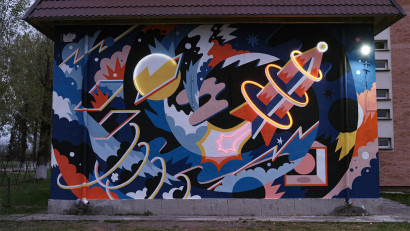
Dima Kashtalyan lives across multiple countries but is currently based in Poland, where he strives to leave his mark in the most meaningful way possible in the graphic arts realm. Among his significant projects are a collaboration with the clothing brand Cropp for a collection exported to 20 countries, and his selection by the British Royal Watercolor Society for their annual works-on-paper exhibition. This year, Dima participated in the Artown Festival alongside 50 artists from 10 countries, celebrating urban art with the community. During the festival, he created a 25-meter-high mural titled Step Towards a Dream.
“For a long time, I have felt that we are in a transitional phase toward a new era with new ways of living and interacting. This shift will bring significant upheaval and change, affecting everyone to some extent” says Dima.
Dima is a responsible artist, mindful of the messages he leaves behind, whether they address ecological, political, or personal themes. For him, art is an extension of his personality. He believes that AI will act as a sieve for the creative industries, leaving only relevant artists standing, without risking total extinction. He views technological revolutions with confidence rather than fear of what tomorrow may bring.
Defining moments
The first defining moment in my creative journey was when I became interested in graffiti. It was the starting point of my artistic path. Before that, I wasn’t particularly interested in creativity, art, or drawing.
The next important stage was realizing that it’s possible to earn money through art. At that time, I started working as a graphic designer while continuing to create graffiti. Over time, graffiti evolved into illustration because I enjoyed drawing characters more than just letters.
Another turning point was discovering the diversity of art: classical painting, graphics, and not just street art. During that period, I traveled a lot, visited museums, read books, and explored the world’s artistic heritage.
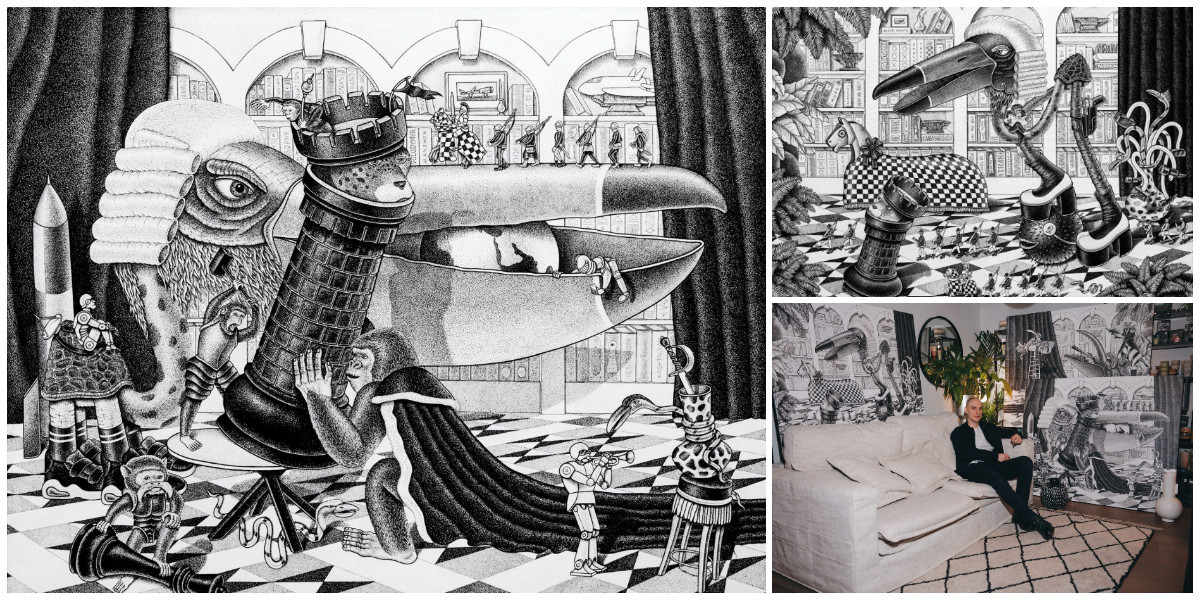
The next significant stage was creating my first large-scale graphic work. During this process, I realized how much I enjoyed conveying the shape of objects using dots and fine lines to create textures that seem to vibrate. This work was inspired by an exhibition of Belarusian graphic artist Valery Slauk and a street art exhibition showcasing works by contemporary French artist Nicholas Barron. These events motivated me to start shaping my own style.
Over time, I understood the importance of focusing on one direction to develop a recognizable style and technique. Before that, I experimented with various methods, including vector illustrations, classical and non-classical painting, and graphics. Gradually, I chose a cohesive path, creating works in black and white, then trying colored canvases and even graffiti in this style.
One of the most pivotal realizations was understanding that I’m not confined to one country. I live on a large planet and can collaborate with artists, institutions, and projects worldwide. This marked the beginning of my journey as an international artist.
Immigration and subsequent moves between countries greatly influenced me, reinforcing my connection to the global world rather than to a specific cultural group. At some point, my art became a stable source of income, allowing me to focus entirely on my creative work.
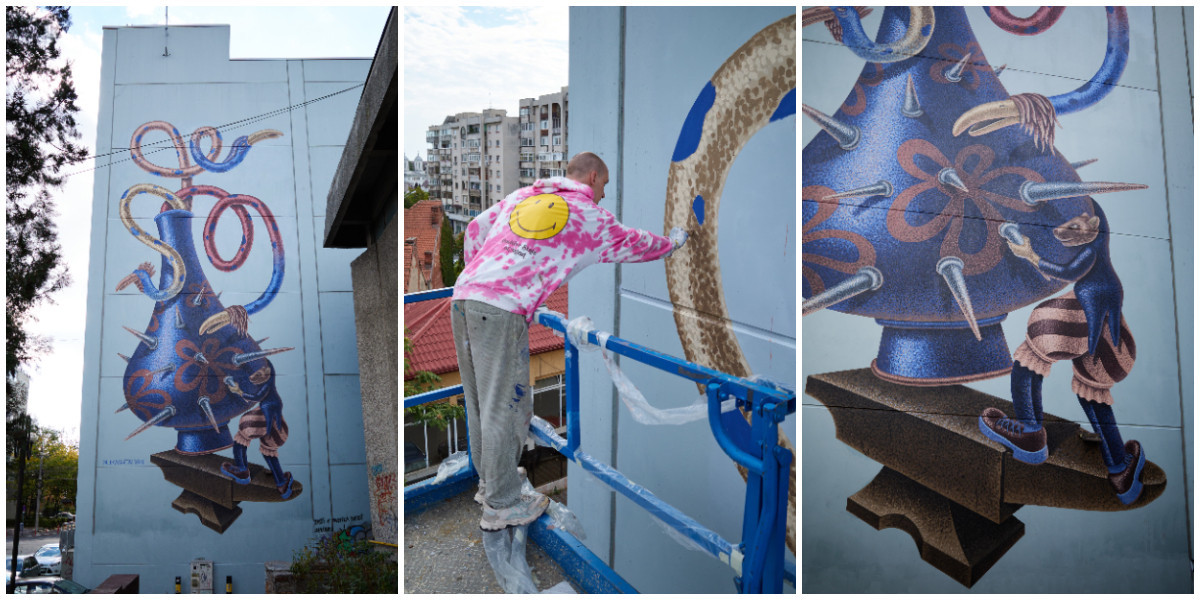
Dima Kashtalyan at Artwon Festival. Ploiești, 2024
How did the relationship with art begin
As I mentioned earlier, my introduction to art began with classic graffiti. Before that, I didn’t have the chance to engage with masterpieces of world art or visual culture, visit museums, or see the architecture of global capitals and different countries. That’s why my first experience with art, if I can call it that, was through subculture — hip-hop, graffiti, skateboarding, and breakdancing. This is where my creative journey started.
Fairly quickly, I realized that graffiti alone felt too limiting for me. Even when creating graffiti, I always tried to push beyond its boundaries: adding characters, inventing narratives, creating backgrounds, and experimenting with complex forms. Gradually, this evolved into illustration. I lost interest in simply writing my name on walls. I wanted to have a dialogue with the audience, sharing my thoughts and emotions through my images.
Reflecting on how my relationship with art developed, I would say that at first, my creativity was purely a teenage passion — something bright, unconventional, and a way to express myself, to step out of the mundane grayness of life and the conservative family norms. It was a way to try something extraordinary and to assert my presence. Over time, this passion grew into something more meaningful.
At some point, I realized that this is something I truly love, want to develop, share with others, and fully express myself in this field. I became a true professional in my craft, primarily due to my way of thinking and approach to the creative process.
Even after having come a long way, I still reflect on what I create, how it looks, where I’m heading, and how significant it is. I understand that I will continue to evolve and transform, both as a person and as an artist.
The beginning in street art
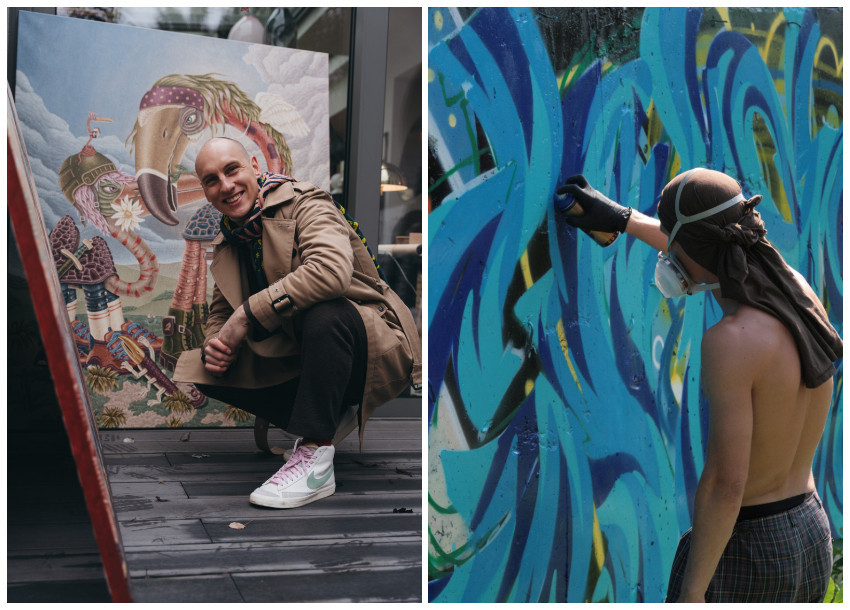
Before discovering street art, I was into graffiti. In my childhood, I didn’t have internet, so I first learned about graffiti from international magazines that my classmate brought back from one of her trips. My friends and I would trace the designs we saw in those magazines. Later, we started replicating the first graffiti pieces we found on walls in our city. Over time, we began creating our own works.
For a long time, I wasn’t familiar with the concept of murals or street art. And even when I encountered it for the first time, it took me a while to realize that I wanted to be part of this movement. I kept creating graffiti characters on walls while simultaneously developing my studio art.
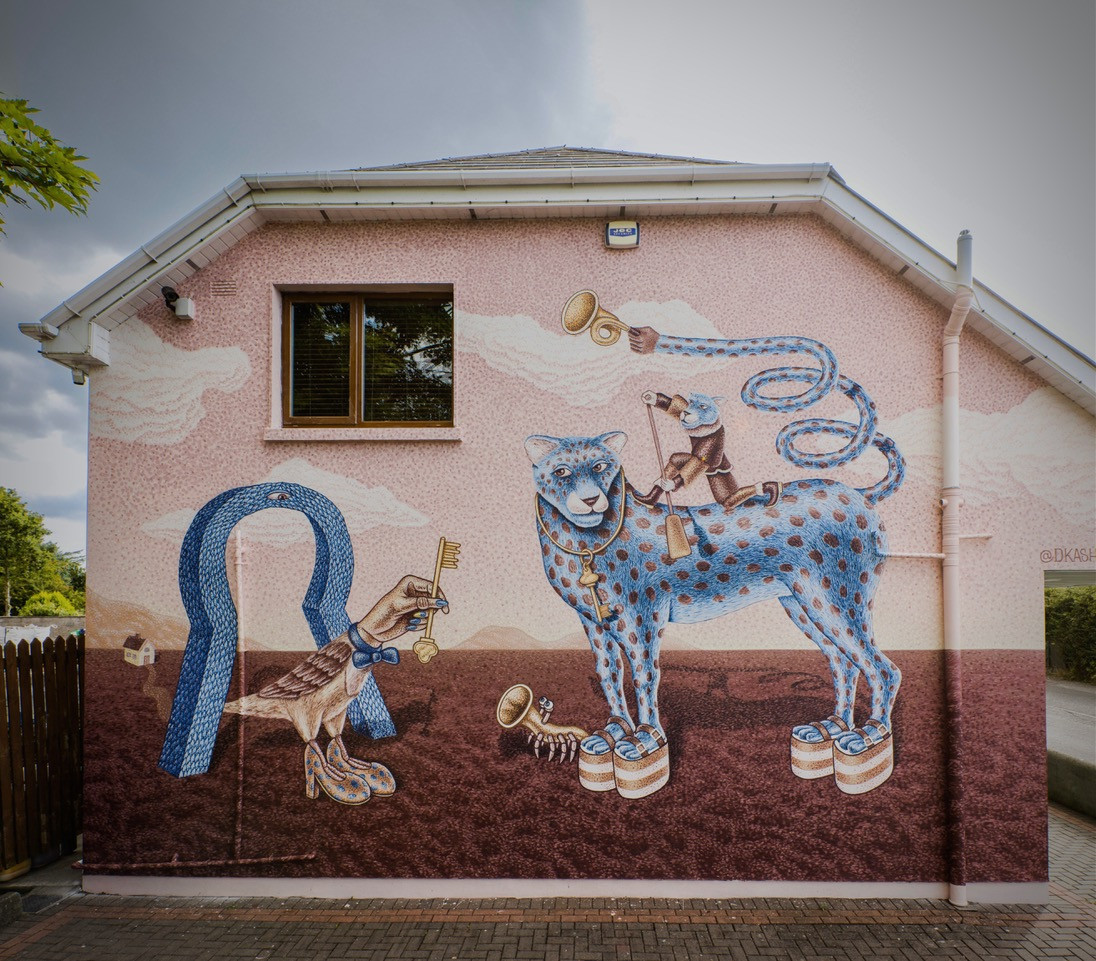
At some point, I decided to try creating a large mural in my own style, rooted in graffiti. I was very happy with the result and decided to continue in this direction.
Initially, what attracted me to street art was the idea of unauthorized intrusion into public spaces. It felt like an act of freedom and rebellion against monotony—a way to express myself and draw attention. As I mentioned earlier, my childhood was quite dull and lacked vibrant, inspiring colors.
Now, what fascinates me most about street art, especially murals, is the opportunity to connect with people through my work in public spaces. I never know who will see it or what they will think, but I’m certain that many will notice it, and perhaps it might influence them in some way.
Moreover, I still find creating murals exciting because it gives me the chance to feel like a teenager again—free, open to the world, and sincere.
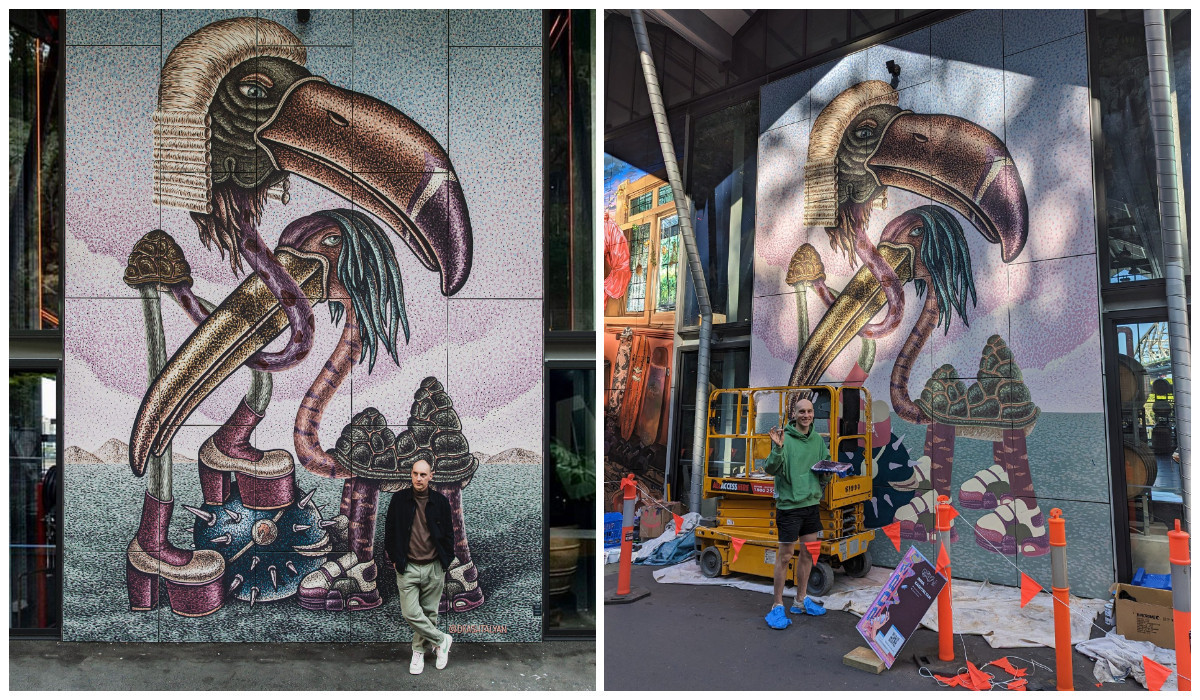
Dima Kashtalyan, Date After a Long Separation, Brisbane, Australia
How would you define yourself as a visual artist
This is quite a complex question, and perhaps it’s better to ask my audience and those who appreciate my work. As for me, I see myself as a multidisciplinary international artist. I like to think that my art isn’t confined to a specific direction or style — it’s a harmonious continuation of who I am as a person.
Of course, my work can be classified and placed into certain categories, but I don’t enjoy doing that. I suggest asking me this question again in 40–50 years, when I’ll be able to look back on my creative journey and analyze it more thoroughly.
For now, I’d say that my artistic fingerprint is an authentic and harmonious reflection of myself. I strive to work on myself, stay flexible, and evolve over time, constantly reflecting on what I create. This allows my art to remain dynamic and vibrant, rather than becoming static and rigid.
I believe that once this fingerprint becomes fixed and unchanging, it’s a sign that the creative journey has lost its purpose, turning into endless and meaningless repetition.
Source: Dima Kashtalyan
Techniques and materials that you have experimented with
Recently, I’ve tried oil painting. I really enjoyed the experience, and I’m looking forward to working in this medium more extensively in the future.
Additionally, this year I explored the technique of linocut for the first time and created several prints. During this process, I deliberately used tools that prevented me from achieving my usual level of detail through dot work. I did this intentionally to see how my stories and characters would look in a slightly different technique.
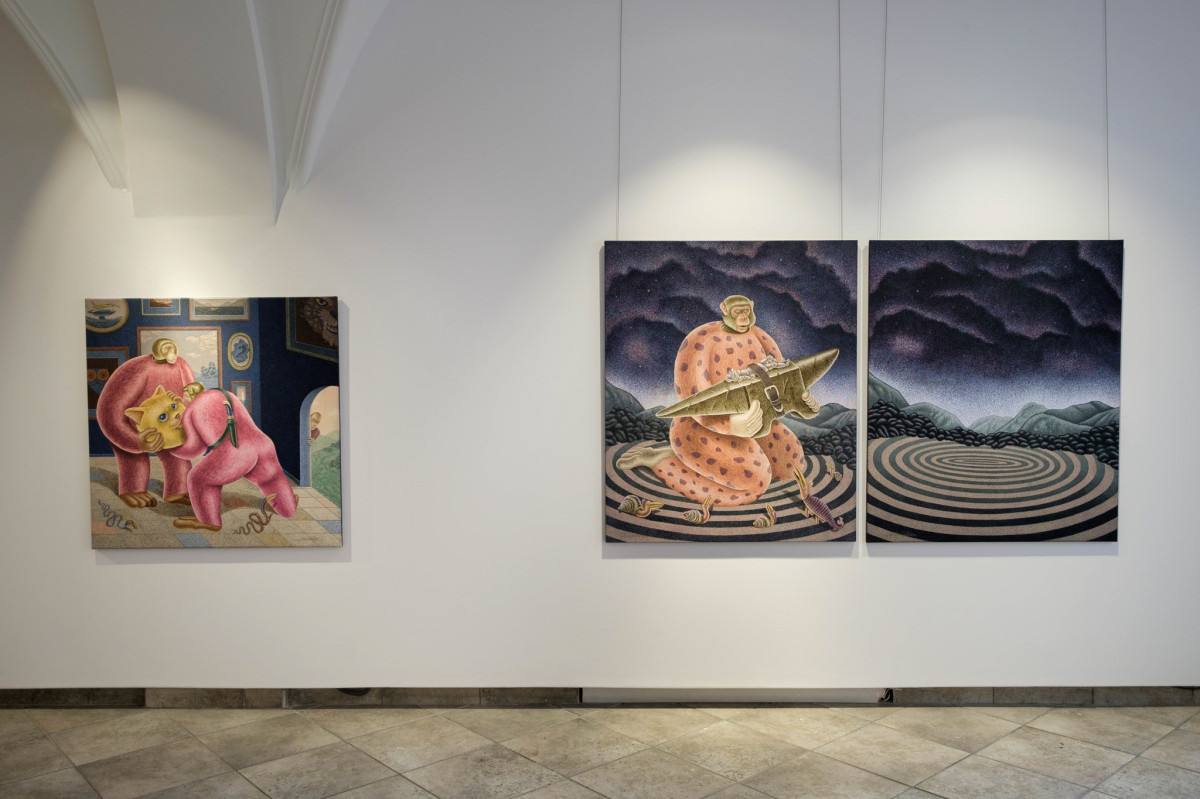
I’ve also continued experimenting by combining acrylic painting with fine dot work in ink. This fusion of my signature graphic style and painting elements creates something fresh and unique.
Recently, I’ve been actively practicing digital illustration in my traditional technique. Previously, my workflow was more complex: I would create a significant part of the work as highly detailed, large-scale graphics on paper and then finalize it on the computer, which took a lot of time.
Now, I’ve started creating illustrations entirely in a digital format while maintaining my style and technique. This approach has allowed me to find a better balance between time spent and the level of detail required for such works.
Topics that concern you
I would say that two main topics concern me. The first is personal: who I am, where I am heading, where I want to live, and what I want to do. Many of these questions are closely tied to the second theme: my life within the context of the world and its changes.
I am deeply interested in the future. I worry that the old systems of interaction between countries and people have become outdated and stagnant. For a long time, I have felt that we are in a transitional phase toward a new era with new ways of living and interacting. This shift will bring significant upheaval and change, affecting everyone to some extent.
I’ve also noticed how rapidly the world is changing. Often, we either fail to keep up with these changes or resist them, clinging to fragments of the past. But the momentum of these transformations is unstoppable. I am glad they are happening because they drive evolution. Instead of resisting, we should study these processes, participate in them, remain flexible, and adapt. At the same time, we must not dismiss our past experiences, as they hold valuable lessons and resources for the future.
I am also fascinated by new technologies and how they have already reshaped the world and my profession. I am curious about how they will continue to influence the future of my work, and this excites me rather than frightens me.
Additionally, I am deeply concerned about environmental issues, climate change, and global warming. Will humanity be able to meet these challenges? How soon will people realize, on a global scale, the need to unite and take collective action? I also question whether it is possible to build a world based on cooperation and creation rather than destruction and oppression of others.
Dima Kashtalyan, Era of Great Geographical Discoveries
Recent projects
The most important recent projects I would highlight are two solo exhibitions: one in Taiwan and another in Poland. Additionally, it was very significant for me to participate in the largest Asian art festival, Art Taipei — a big step for me. This year, I had the opportunity to work with a major clothing brand CROPP and create my own summer collection for both men and women, which has been sold in 20 countries across Europe. This was an exciting experience working with the creative team behind a large brand.
Also this year, I was fortunate to create my largest studio piece — a highly detailed graphic work on canvases measuring two by seven and a half meters. This triptych was for a private collector. It is extremely valuable and important for me that art enthusiasts and collectors trust me with such large-scale, labor-intensive, and expensive projects.
This year, I also worked on an illustration for Technology Review magazine. The significance of this work lies in the fact that the article focuses on protecting artists' copyrights from artificial intelligence. It is about researchers who are studying this issue and developing programs that allow artists like me to be better protected.
In addition, I was fortunate to be selected by the British Royal Watercolour Society for their annual exhibition of works on paper. My piece was exhibited in a major gallery in London. This year, I also had several interesting creative collaborations with private individuals and musicians I deeply respect. An interesting experience was creating a series of original works specifically for a new seafood restaurant. This was a unique opportunity to design works around a specific theme for a particular interior.
It’s also worth mentioning my participation in the Artown festival. This is very meaningful for me because I enjoy creating multidisciplinary works, and at the same time, I love visiting Romania and spending time there.
The challenges of street art
As an experienced participant in street art with a background in graffiti, including legal projects, commercial murals, and muralism, I feel I have a good understanding of this industry. I can also evaluate it as a viewer, observing what’s happening from the outside. In my opinion, one of the main problems in street art is the dominance of non-professionals, both among organizers and artists.
This imbalance is largely due to the fact that many organizers lack experience or understanding of street art. Many of them don’t have a sense of context or consider how a piece will fit into the urban environment. As a result, both organizers and artists often focus on their own goals without thinking about what is important for the audience and how the artwork interacts with the surroundings.
This also makes it harder to create relevant and harmonious public murals, and unfortunately, many of the works that appear on city walls don’t always meet high standards. It’s important for organizers to strive for quality, rather than using projects as a way for self-promotion or profit. This often leads to situations where artists are invited to work for minimal payment or even for free, which lowers the overall quality of murals. Ultimately, this results in works that aren’t always fitting or aesthetically pleasing.
Another key issue is the longevity and quality of mural preparation. Street art has become less durable, and many projects don’t consider how to preserve works for a long time. It’s essential to pay attention to wall preparation, material selection, and creating works that will continue to please viewers for many years. Otherwise, we risk producing art that quickly loses its relevance and appeal.
Unfortunately, at the moment, there isn’t a clear system of criteria that can help evaluate professionalism, style, quality, and appropriateness of works. In this sense, street art as an industry is still finding its way, and it’s important that principles are developed to foster truly high-quality and meaningful art in public spaces.
What do people not know about this art form
On average, especially among people who are not deeply involved in the phenomenon, there is often little distinction between legal and illegal graffiti or murals. Most people aren’t aware of the specifics behind organizing and creating these projects. They don’t know that such projects involve not only the artists but also organizers, local authorities, and various institutions. Behind every artwork in a public space, there’s a unique story, including the artist’s journey, the location, and the people involved in the organization.
Many people, in my opinion, don’t realize that artists who create these works deserve the same respect as professionals in any other field, and their work should be properly compensated. There’s a misconception that artists are simply people who enjoy making their drawings, without considering that they have families to support, bills to pay, and a future to plan for.
Additionally, people often don’t think about the financial side of large-scale urban projects. Creating murals on city walls requires significant budgets. Unfortunately, art doesn’t always fall within the most urgent areas, such as food, healthcare, or infrastructure. Because of this, it’s often difficult to convince investors or city authorities of the importance of such projects.
People's attitude towards mural art
In recent years, more and more people have become aware of this phenomenon and encounter it in their daily lives. It seems to me that people have become more tolerant and interested in such occurrences. In the past, people were more cautious and often didn’t understand why certain images were being painted or what their purpose was. There was a lot of ignorance regarding the artists themselves. Therefore, I believe that, in terms of public attitude, murals are currently experiencing their best period in recent times. The only exception I would make are the periods when murals were frescoes in temples, royal residences, and other public places. It seems to me that during those times, the value, quality, and status of murals were incomparable to what we have today.
How is street art changing and evolving in your country
It's difficult for me to answer this question, as the phrase "in your country" is somewhat abstract for me. Over the past three years, I’ve lived in my fourth country. Currently, I live in Warsaw, Poland. Here's what I’ve observed: In recent years, new author murals or mural projects have not appeared in the city. I see how old murals, created by world-renowned artists as part of mural projects, gradually fade and disappear from the walls. On the other hand, I see a huge number of building facades being used for advertising murals, which are replaced every month with new ones. This is a very popular trend in Warsaw, related to wall art. I also notice a lot of graffiti tags in the city. The number of tags seems to be increasing in the central areas of the city. Personally, I find it a bit overwhelming. Even with all my graffiti experience and understanding of the culture, I can't bring myself to enjoy or appreciate the overwhelming amount of graffiti tags on the streets. They create a lot of visual noise. The city, with its wall paintings, lives its own life, and I’m just observing, curious to see what will happen next.
A place you would like to leave your mark on
I can't pinpoint specific walls or places in the city where I would like to leave my mark. However, I can say that I would love to work on truly monumental murals—those that will last for decades or perhaps even longer. It would be interesting to collaborate on public spaces like theaters, museums, or the halls of large public buildings, as these spaces will live on for a much longer time. I would like the opportunity, both technically and in terms of time, to showcase everything I’m capable of in such projects. Additionally, I’d love to explore working with mosaic techniques on walls, which would be an exciting new challenge for me.
Being a contemporary artist in 2024
Being a contemporary artist in 2024 is both exciting and challenging due to competition and the devaluation of art and its prices. In my case, I’m very interested in pursuing this path, and I’m grateful for the opportunities that the internet offers, such as communication, movement, experimentation, and the ability to combine various techniques. Collaborating, creating digital illustrations, and working on murals, among other things, makes my creative life diverse, flexible, and incredibly engaging. At the same time, it allows me to earn money from my art.
Having experience and skills in different artistic directions makes me more financially stable. Based on my own experience, I can say that it’s possible to make a living from art in 2024, including through personal projects that reflect the artist's passions. However, I’d like to emphasize that this is a challenging journey. Before starting, I would advise people to carefully consider whether they’re ready to risk investing a lot of time and effort, knowing that success is never guaranteed. Contemporary art is a highly uncertain field.
The fears of a creator in this troubled time
One of the main fears I would say is the rapid development of technology, the acceleration of time, and the changes happening around us. Many artists are intimidated by the active growth of artificial intelligence and the possibility that it could take work away from human creators. However, from my perspective, I’m not afraid of this. I believe that artificial intelligence will only take jobs away from certain people, and I think it will push creators to evolve and produce better, higher-quality work, or, as the saying goes, "either improve or fade away." I think this will be a beneficial and competitive challenge that helps truly strong and original artists grow. The demand for handmade art, including musical art, will not disappear anytime soon, in my opinion.
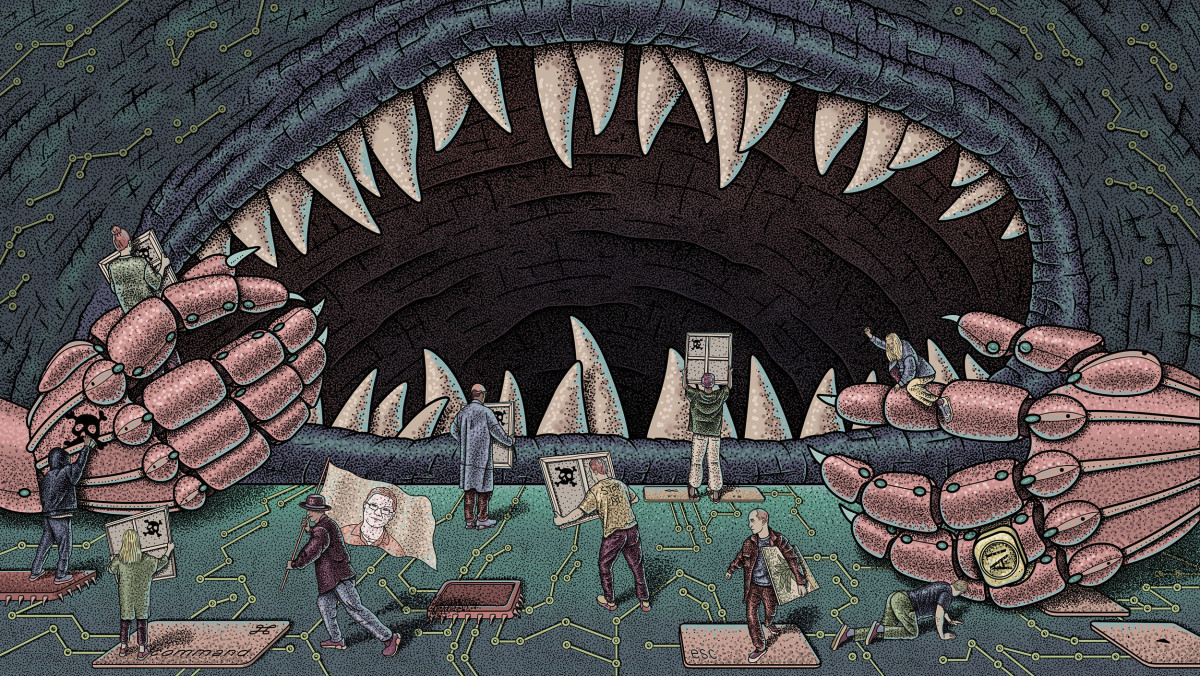
Ilustration for MIT Technology Review magazine, July 2024
Another fear for many artists, including myself, is the uncertainty posed by potential financial crises or looming geopolitical conflicts. During times like these, interest in art and the willingness to invest in it often significantly decrease, as history shows. For example, the COVID pandemic and the associated restrictions had a profound impact on creative processes, projects, and finances in the art world.
There are also classic fears: being misunderstood, not being successful enough, failing to find one’s path, not finding oneself, and so on.
As for the responsibilities of an artist, I find this a very relevant question. Typically, the word "artist" is associated with freedom and self-expression. But for me, being an artist also means taking responsibility for what you create and show the world. Visual images, musical works, videos, and other creative manifestations have an impact on the world around us and on other people. That’s why, as an artist, I follow the principle of thinking about what I’m doing, how I’m doing it, what viewers will see, and what thoughts my work will evoke. As long as I am honest with myself and others in my art, I consider it a harmonious extension of my personality, my principles, and my emotions.
I believe that an artist, like any other person in any other profession, must grow, strive to be a responsible adult who takes responsibility for themselves, their environment, and their activities, especially when those activities impact others.